-
 In depth
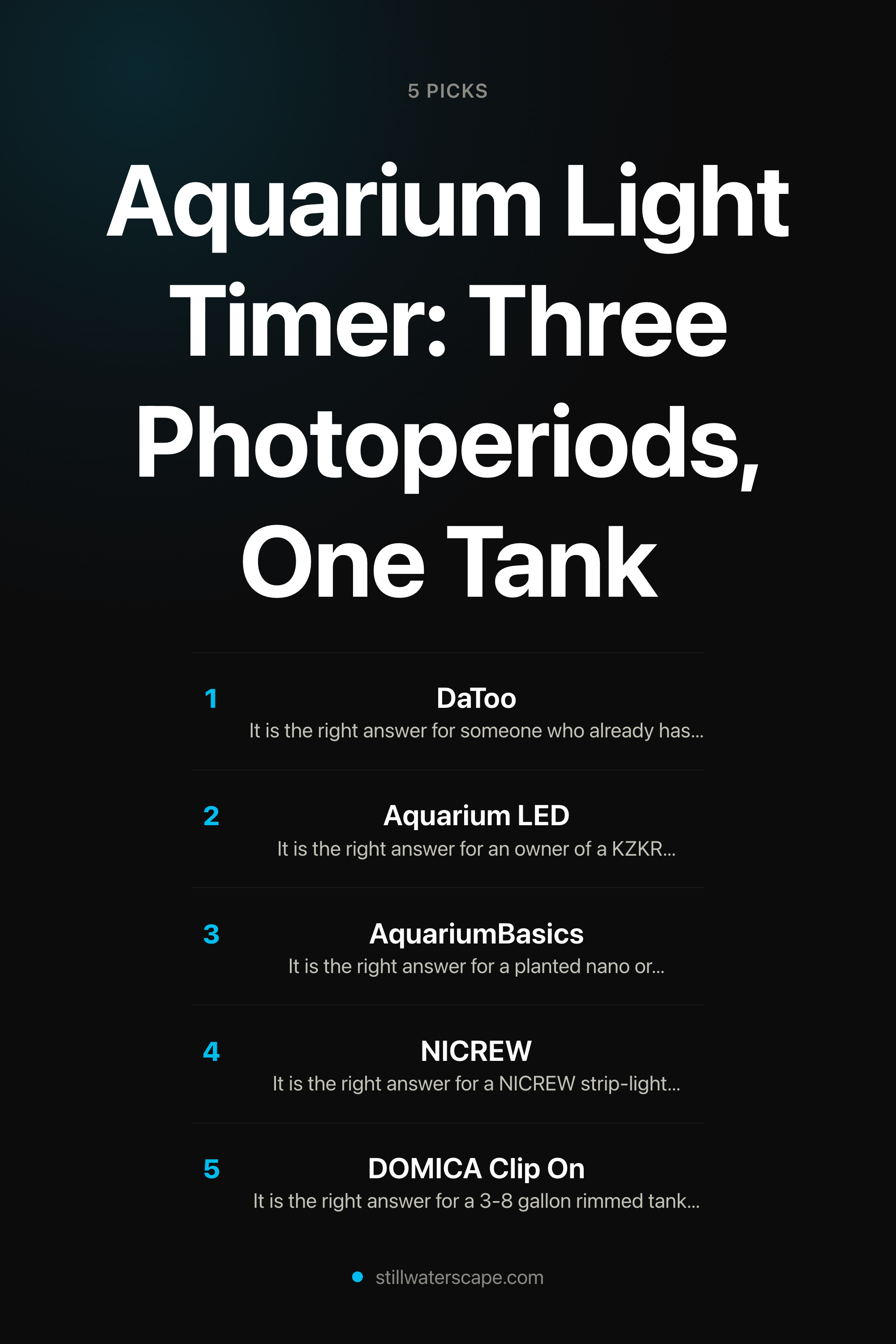
Aquarium Light Timer: Three Photoperiods, One Tank
Published aquarium photoperiods range from 8 to 12 hours with no measurement behind them. A look at what a timer can actually change — duration, and nothing else — and why the fixture may already hold its own schedule.
· 9 min read
-
 In depth
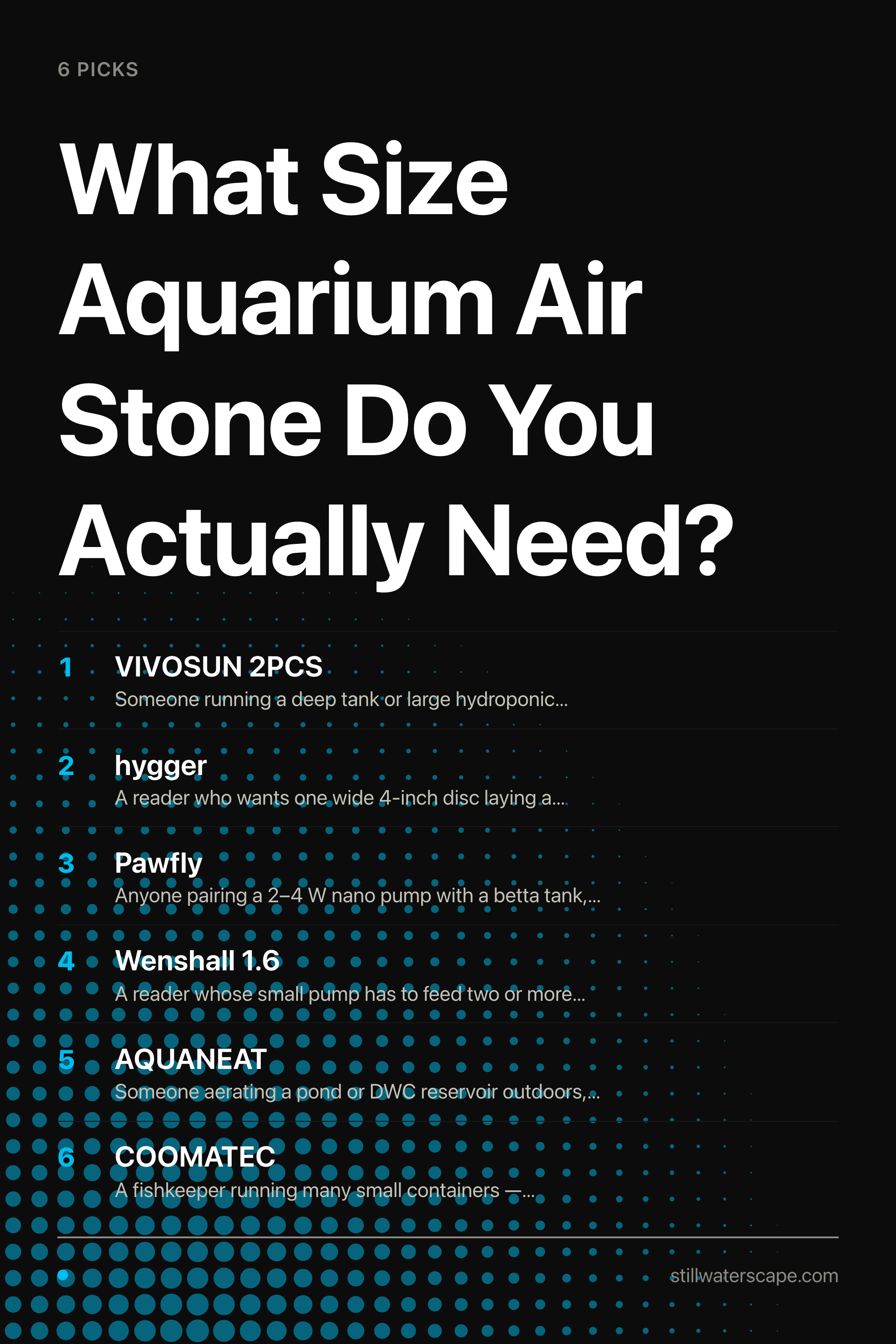
What Size Aquarium Air Stone Do You Actually Need?
Air stone sizing is a pump-matching problem, not a gallons problem. This guide pairs stone dimension with pump output, names the visible symptom of each mismatch, and explains why water depth changes the pump you need.
· 10 min read
-
 In depth
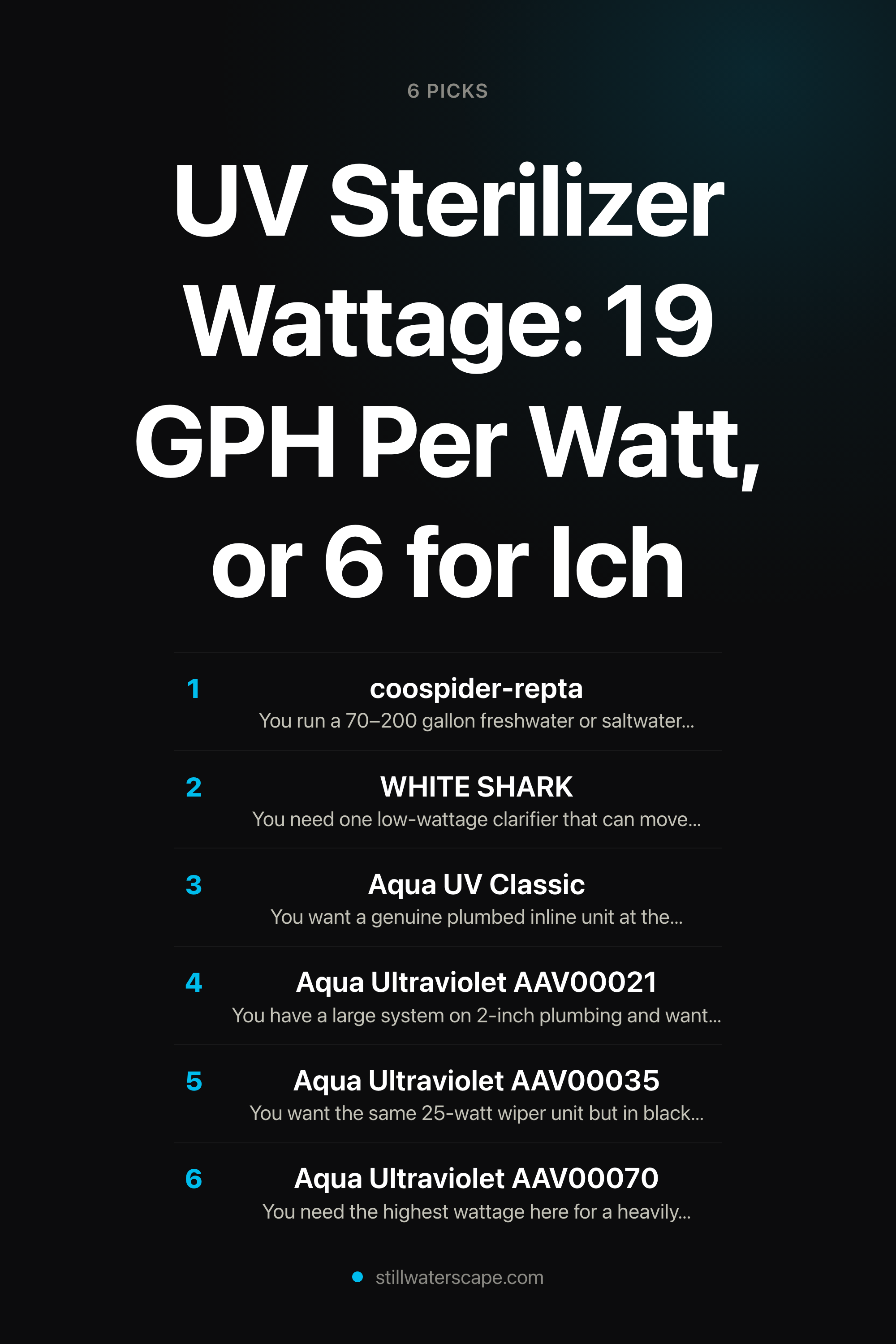
UV Sterilizer Wattage: 19 GPH Per Watt, or 6 for Ich
Wattage is only half a ratio — the other half is flow. Published dose tables show the same 25-watt lamp rated 475 gph for algae and 150 gph for parasites, which means nearly every gallon rating on the market is an algae rating in disguise.
· 16 min read
-
 In depth
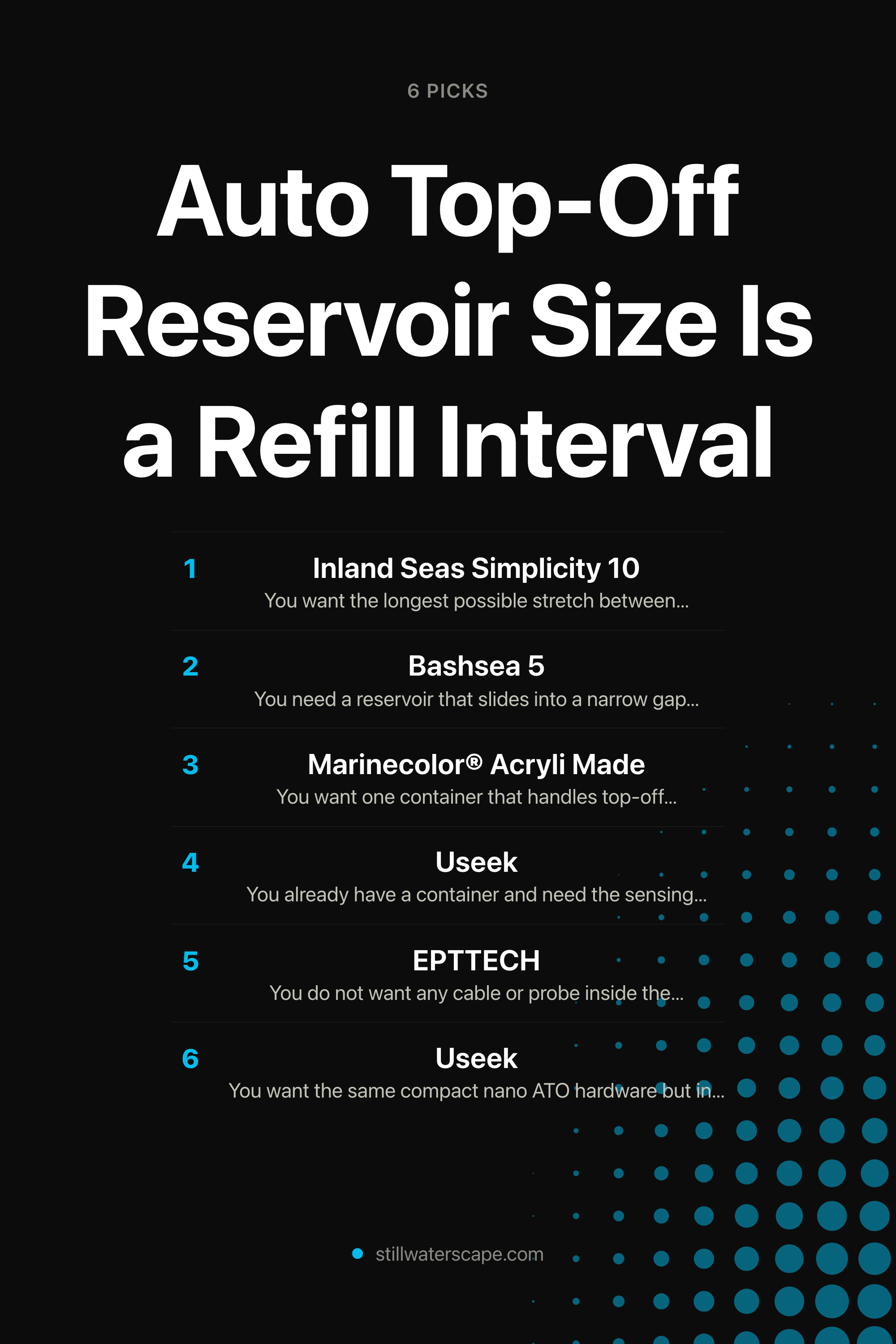
Auto Top-Off Reservoir Size Is a Refill Interval
Reservoir sizing charts pair a 5 gallon vessel with a 75 gallon tank, but that says nothing about how many days it lasts. Size by measured evaporation and refill interval, then check the result against the 15-20% failure ceiling the sellers publish.
· 13 min read
-
 In depth
Aquarium Powerhead Flow: Sizing Past Filter GPH
Filter turnover and circulation turnover share a unit but do different jobs. Here is why a canister's GPH rating contributes almost nothing to in-tank flow, and how to size, place and sanity-check powerheads instead of stacking multipliers.
· 14 min read
-
 In depth
Aquarium Chiller BTU: Formulas 1,394 BTU/hr Apart
The standard volume x 8.3 x delta-T formula ignores pump, light and skimmer heat worth roughly 750 BTU/hr on a mid-size reef. A look at how three published methods diverge, what room temperature does to sizing, and why horsepower ratings do not settle it.
· 13 min read
-
 In depth
Protein Skimmer Ratings Measure the Wrong Thing
Manufacturer gallon ratings hide the stocking assumption behind them, which is why Bulk Reef Supply says undersize and three other retailers say size up. Here is what to check instead: bioload, air draw in litres per hour, and five physical clearances that disqualify a model before any number does.
· 11 min read
-
 In depth
CO2 Diffuser Size: 4 Bubble Checks Beat Gallon Charts
Disc diameter is a bubble-throughput proxy, not a tank-capacity rating. Aquario's chart ends at 24mm for "32 gallons and above", PlantedBox sizes by product line, and neither translates — so diagnose sizing from bubble behaviour and flow instead of gallons.
· 14 min read
-
 In depth
How Much Aquarium Floor Load Can Your Joists Take?
Three ways of applying the 40 psf residential figure to one 120-gallon tank give 320, 1,920 and 8,640 lbs. Here is why the tributary-joist number is the one that matters, and how to work it out for your own floor.
· 14 min read
-
 In depth
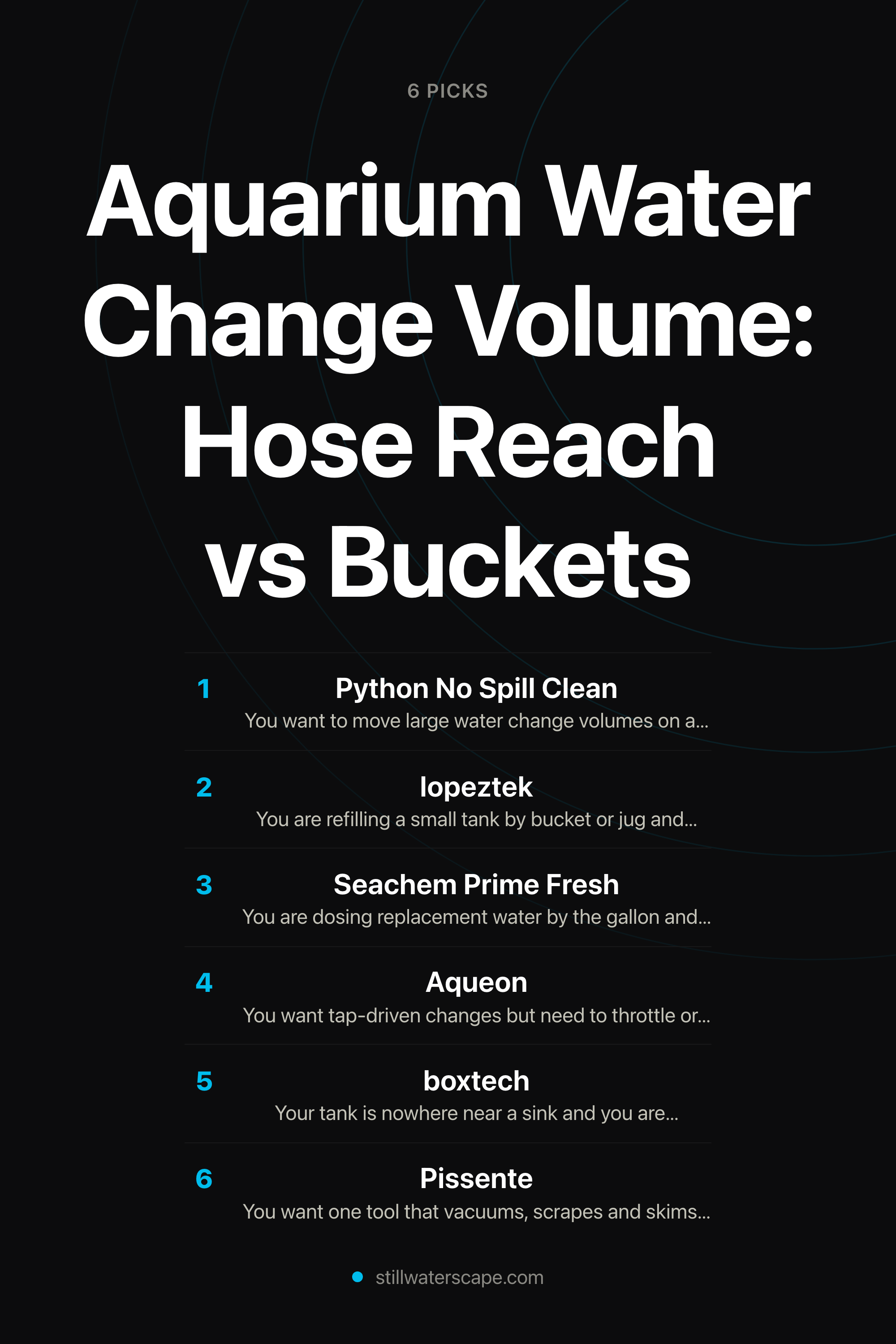
Aquarium Water Change Volume: Hose Reach vs Buckets
Published water change advice ranges from 10% fortnightly to 50% weekly. This piece works the problem backwards from hose reach and bucket trips, then shows what nitrate plateau each volume actually leaves you with.
· 14 min read
-
 In depth
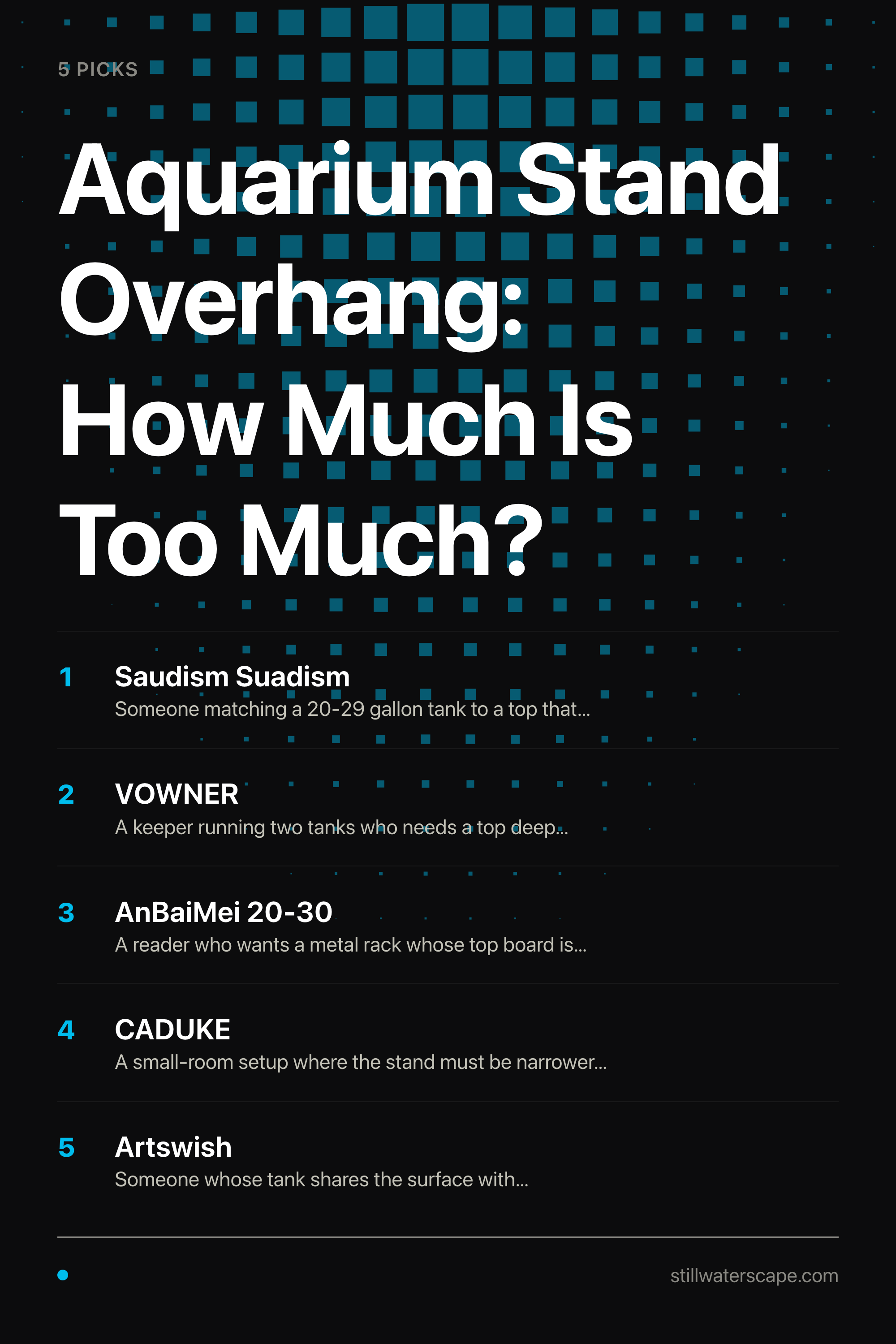
Aquarium Stand Overhang: How Much Is Too Much?
Overhang is three separable risks — unsupported frame rails, cantilever load on the stand, and tipping — and which applies depends on your tank's construction and which axis hangs over. Here are the numbers actually on record, and where the sources contradict each other.
· 11 min read
-
 In depth
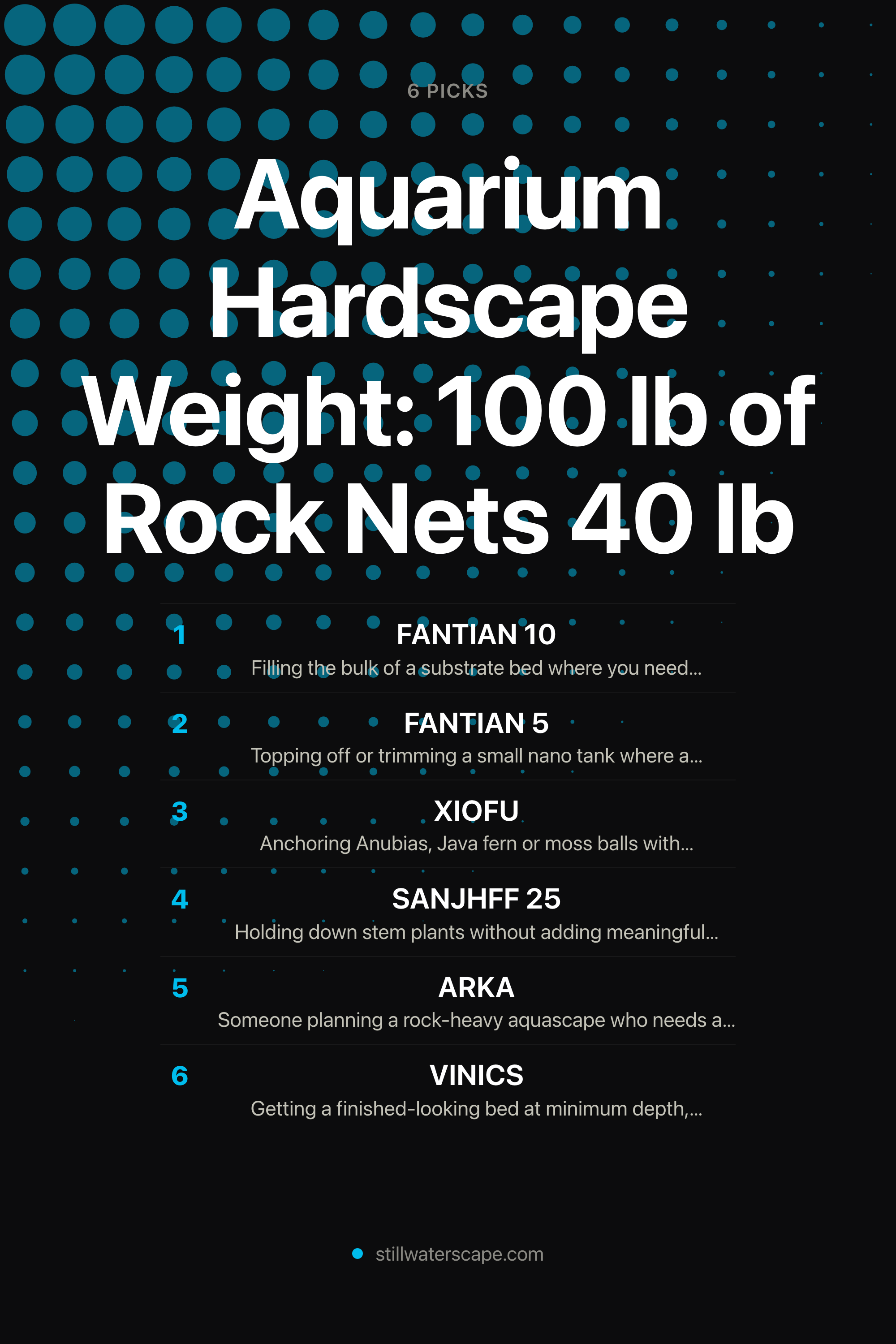
Aquarium Hardscape Weight: 100 lb of Rock Nets 40 lb
Rock and substrate displace water the tank already held, so net load on the bottom panel is far lower than gross weight suggests — a 29-gallon with gravel and 100 lb of lava rock sits about 21% over base water weight. The live risk is point pressure, not total pounds.
· 13 min read
-
 In depth
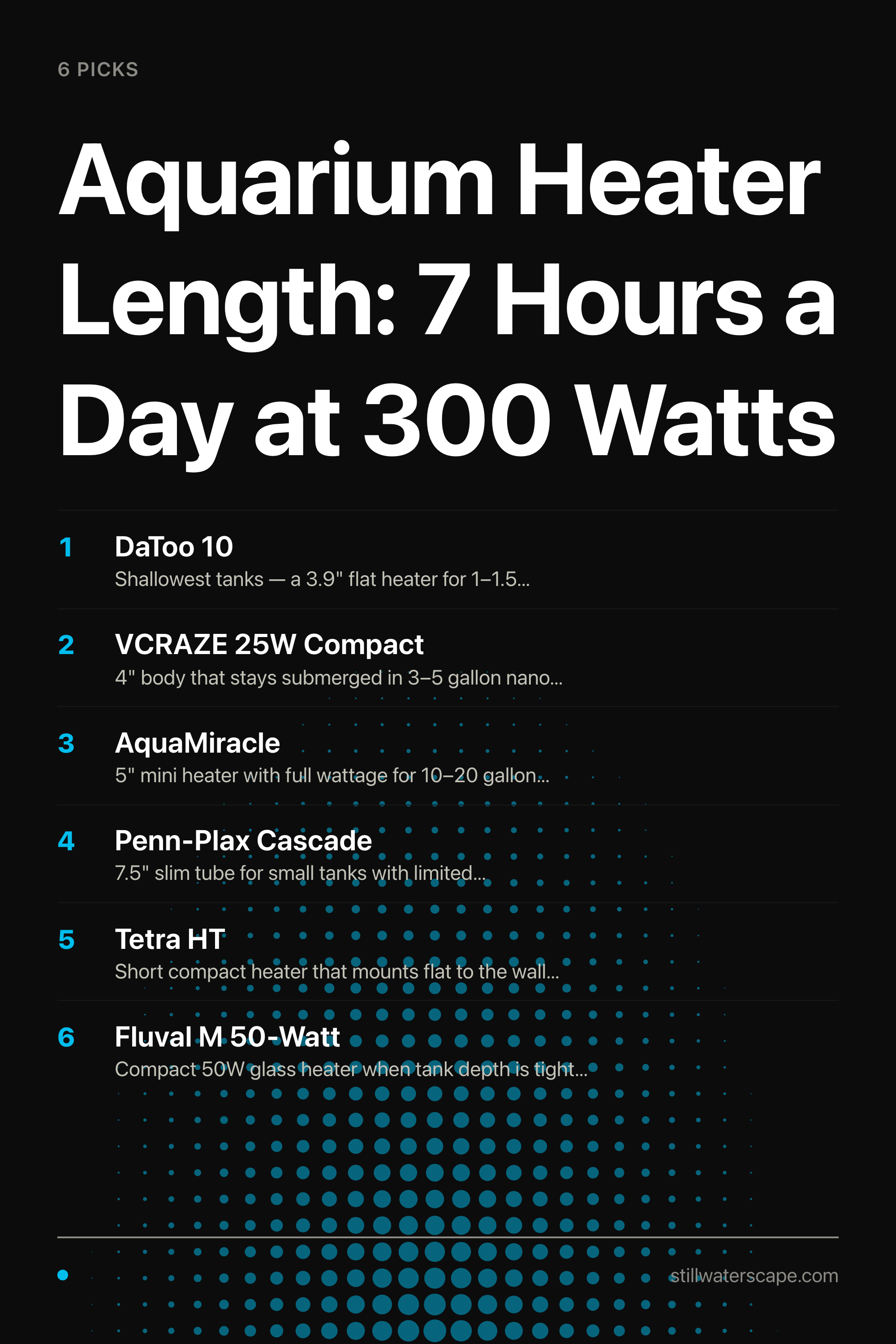
Aquarium Heater Length: 7 Hours a Day at 300 Watts
"Heater length" means tube inches, daily run hours and service life all at once. A documented 75-gallon basement case shows a 200W heater running 11 hours a day where a 300W ran 7 — same temperature, same electricity cost, far less thermostat cycling.
· 15 min read
-
 In depth
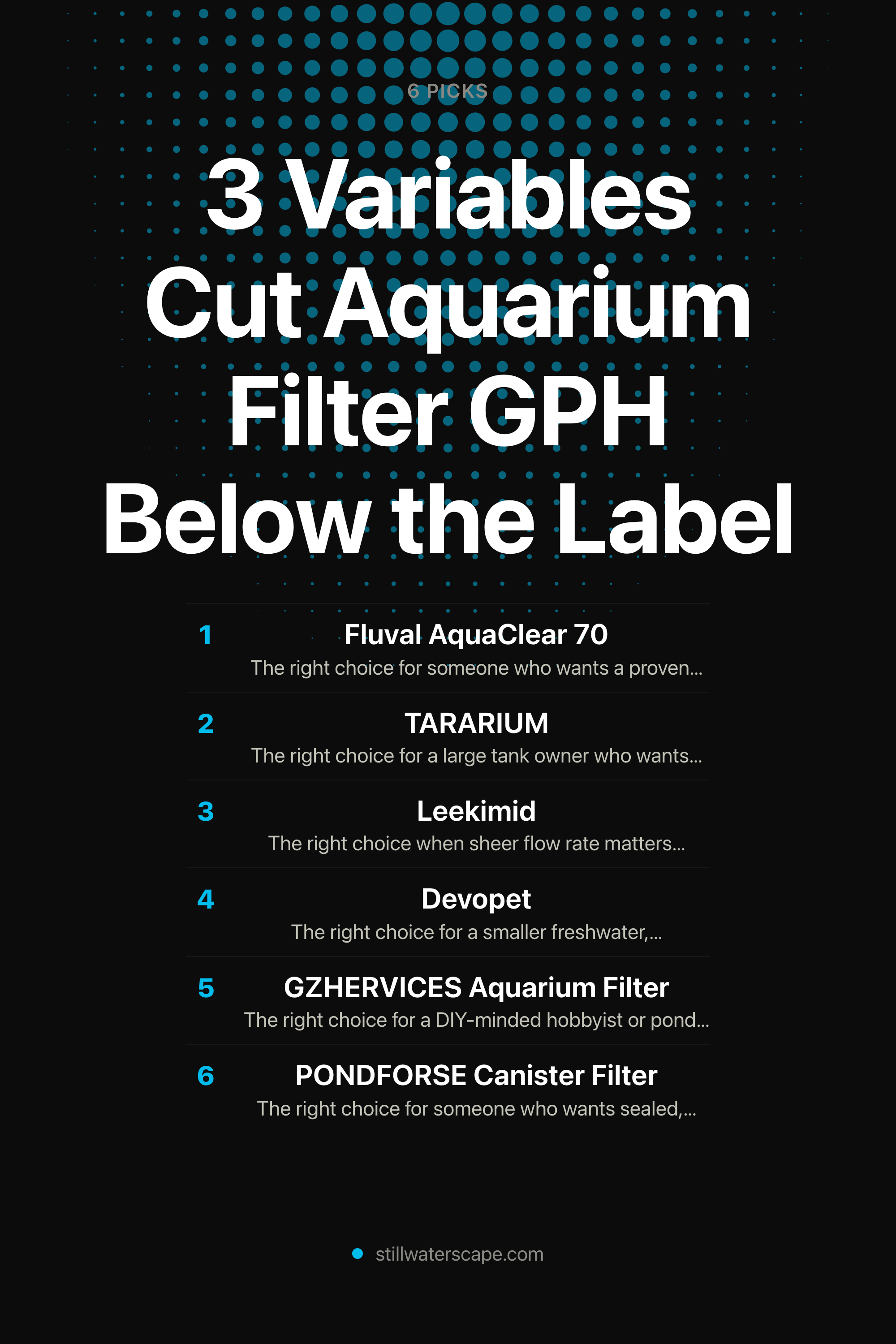
3 Variables Cut Aquarium Filter GPH Below the Label
The GPH on a filter's box is a best-case number. Media resistance, head pressure, and bioload push the real turnover rate well below the rating, and a single 4× multiplier only fits lightly stocked community tanks. This guide shows how to calculate the post-media flow your tank actually receives.
· 11 min read
-
 In depth
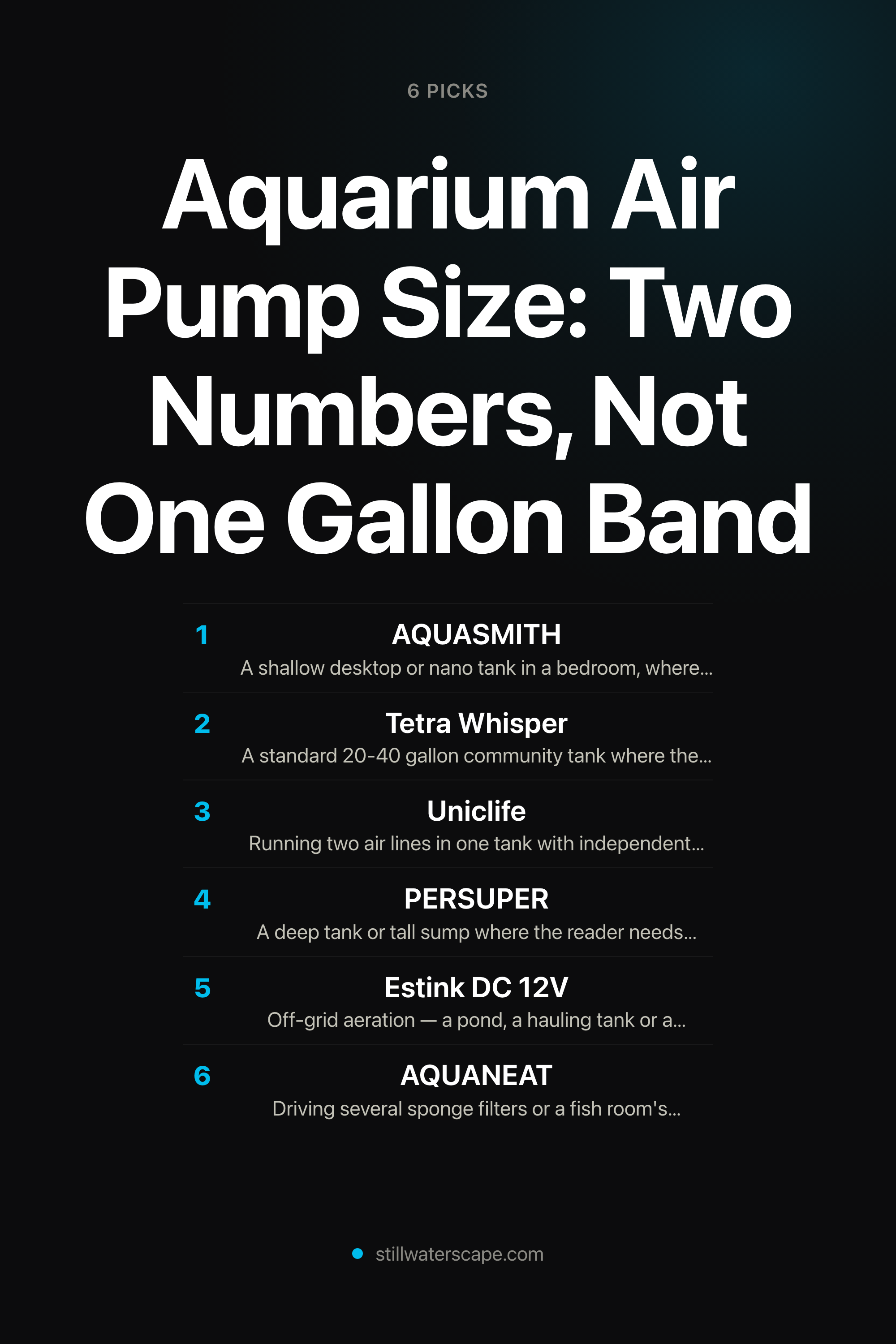
Aquarium Air Pump Size: Two Numbers, Not One Gallon Band
Gallon bands and "20 GPH for 20 gallons" both ignore the one thing that stops an air pump working: the depth it must push air down against. Here's how to size by pressure instead, and why the same 20 gallons in three shapes needs three pumps.
· 12 min read
-
 In depth
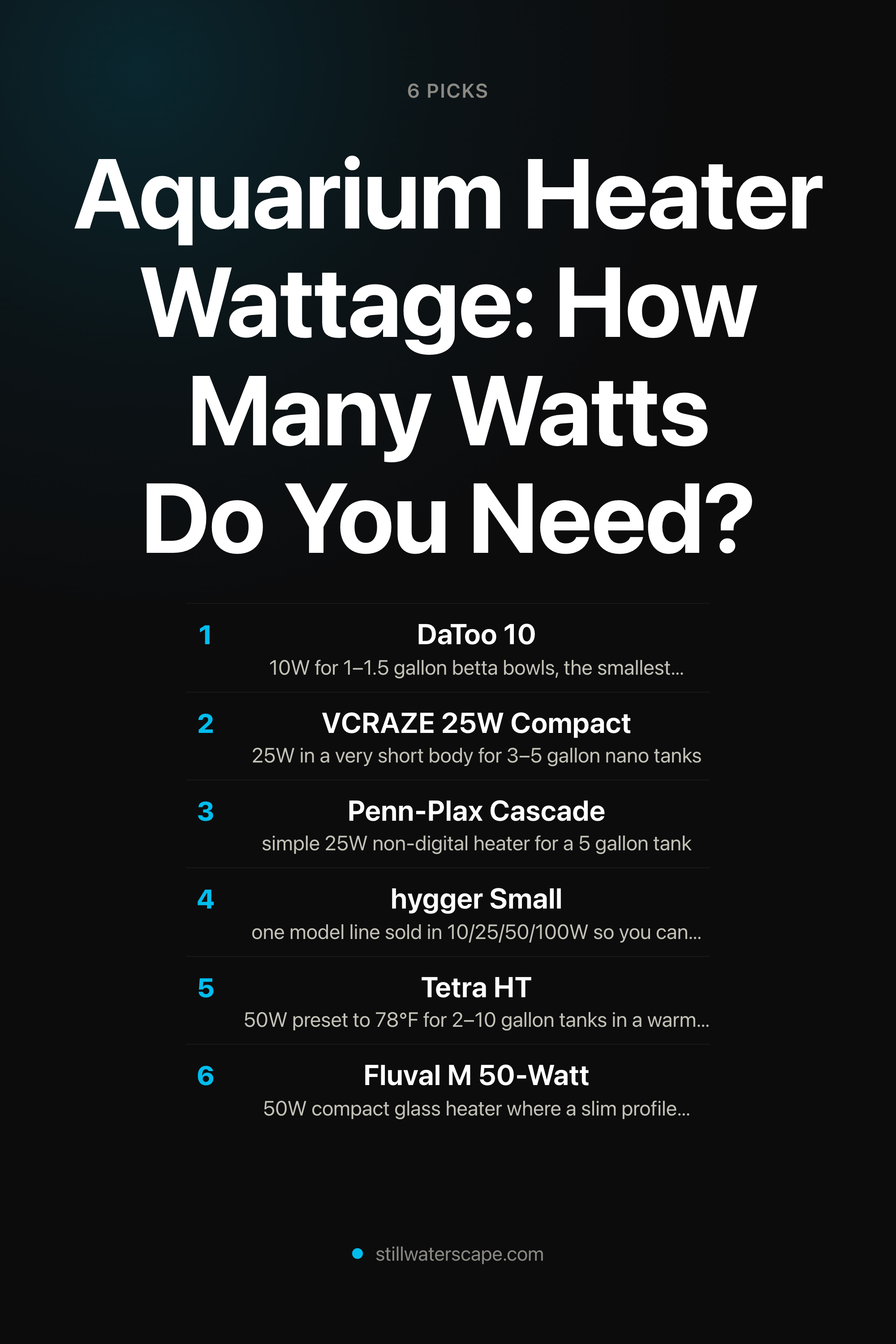
Aquarium Heater Wattage: How Many Watts Do You Need?
Three sellers size the same 30-gallon tank at 75W, 100W and 150W. The difference is room temperature — and the per-gallon rule only holds under a 10-degree rise with a lid on.
· 12 min read
-
 In depth
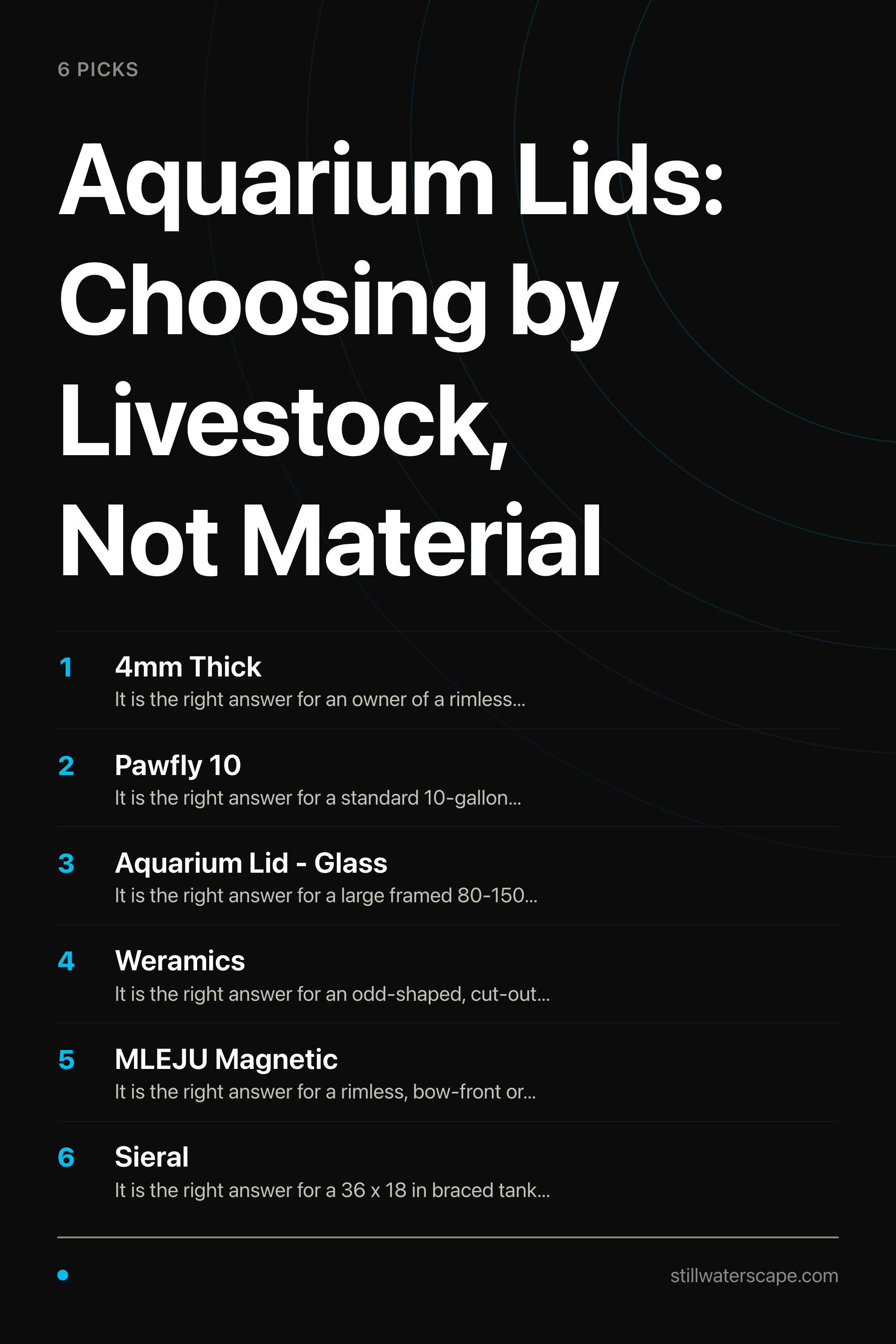
Aquarium Lids: Choosing by Livestock, Not Material
Heat buildup, poor gas exchange and light loss are faults of the tight glass cover, not of lids generally. Here is how glass, vented acrylic and mesh differ across jump prevention, evaporation, gas exchange and light, and how to choose using your own numbers.
· 13 min read
-
 In depth
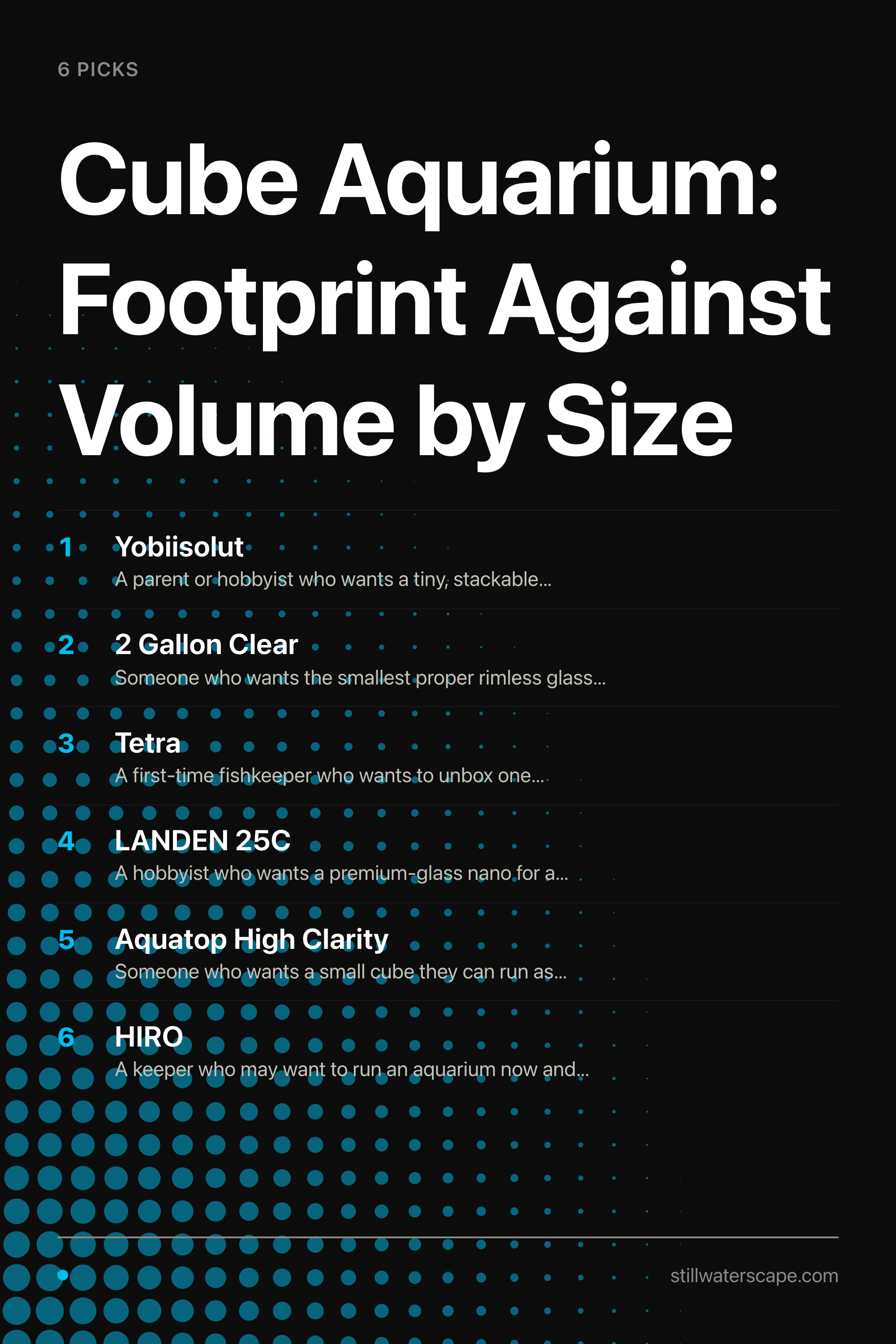
Cube Aquarium: Footprint Against Volume by Size
Cube aquariums claim about twice the footprint of a same-length rectangular tank and return roughly four times the volume. This comparison maps that trade-off at five common sizes, then reviews nine cube tanks from 2 to 15 gallons on weight load, maintenance reach, and what ships in the box.
· 12 min read
-
 In depth
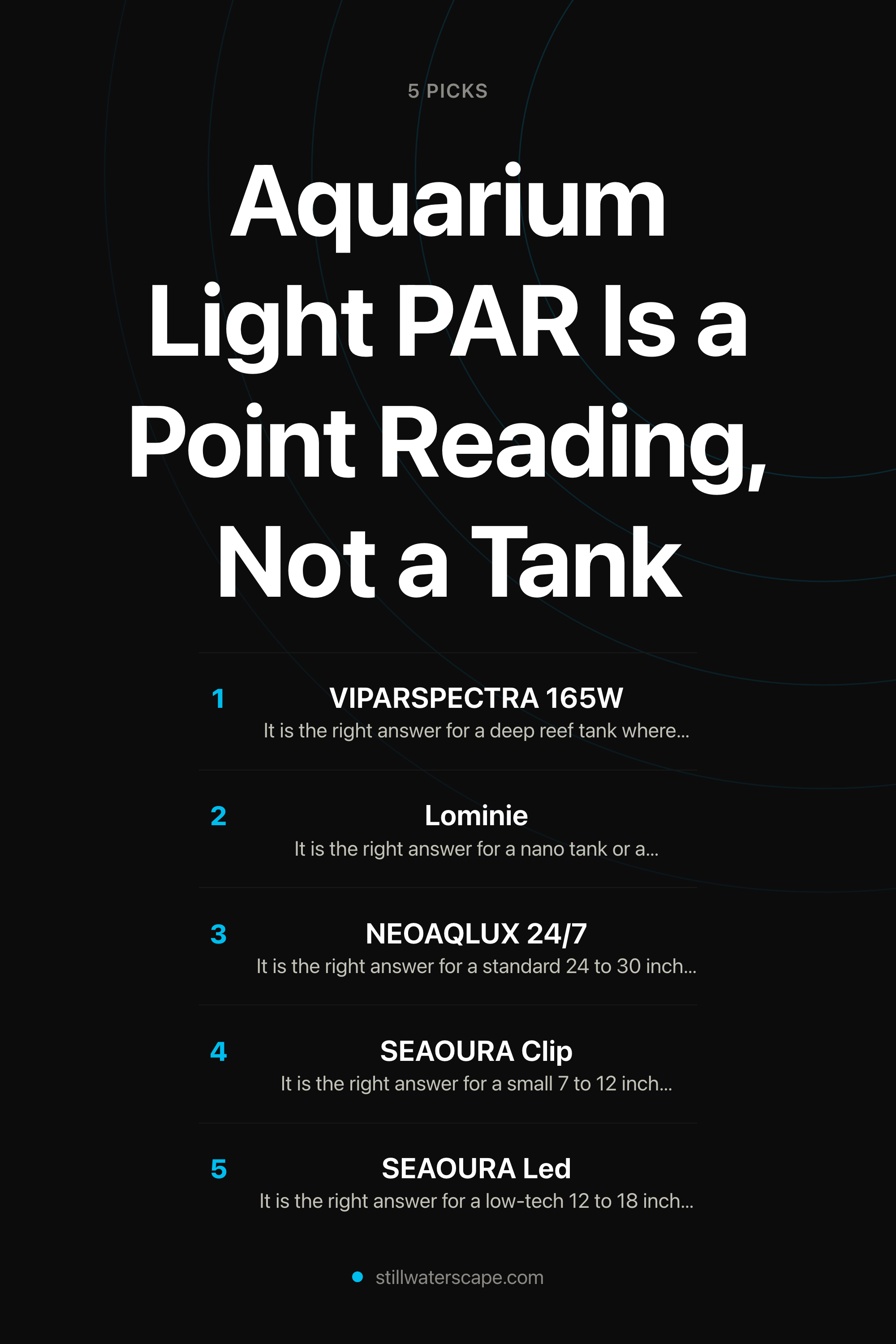
Aquarium Light PAR Is a Point Reading, Not a Tank
PAR targets mean nothing without a stated measurement point and photoperiod. Using published depth readings and the DLI formula, this guide shows how to turn a chart figure into the light your plants actually get.
· 12 min read
-
 In depth
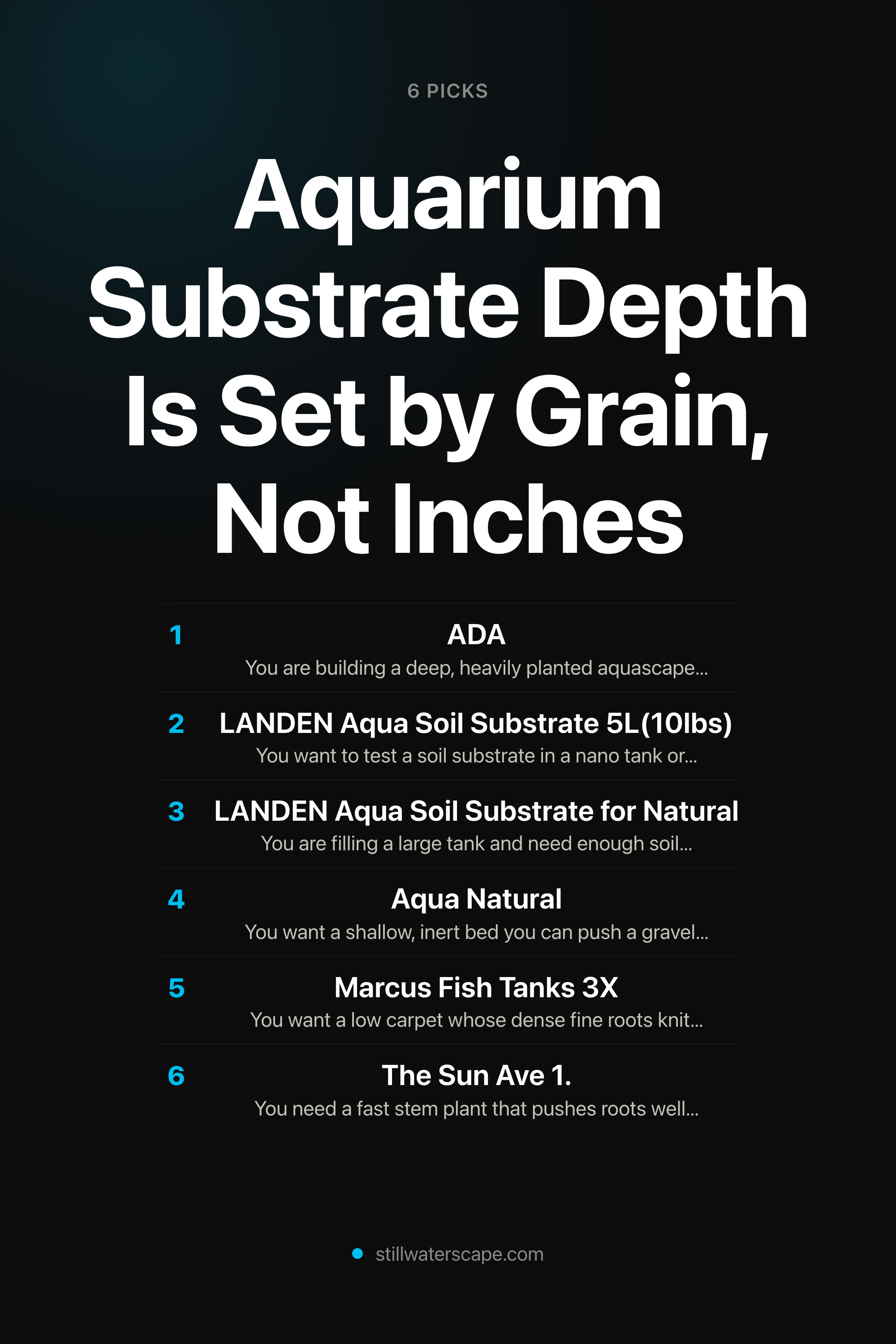
Aquarium Substrate Depth Is Set by Grain, Not Inches
Three inches of sand and three inches of gravel are not the same bed: one sits at its anaerobic ceiling, the other has margin. Grain size and a front-to-back slope resolve the conflict between root depth and gas pockets better than any compromise inch count.
· 14 min read
-
 In depth
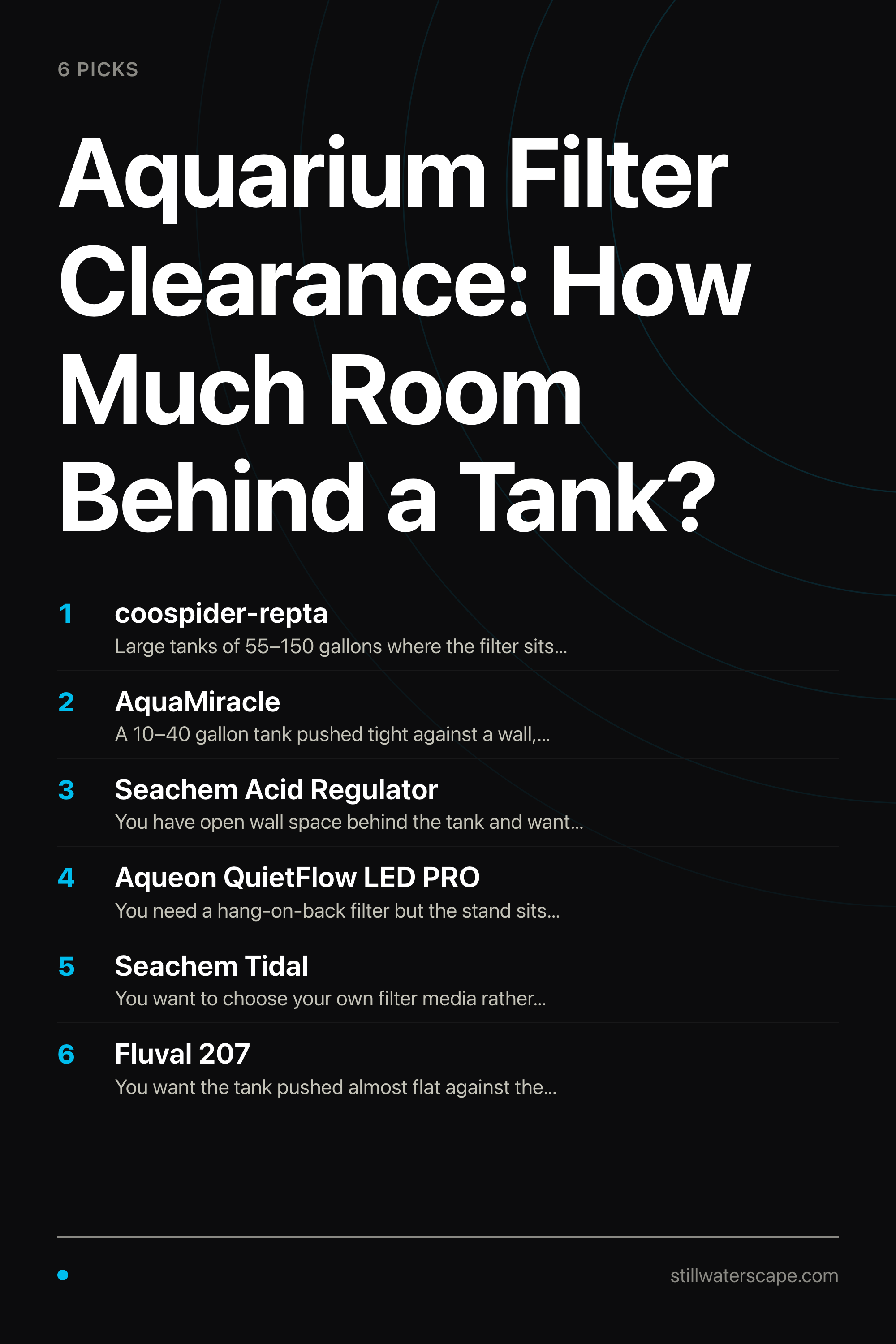
Aquarium Filter Clearance: How Much Room Behind a Tank?
Filter type decides how much room a tank needs behind, beside and below it — and the units that go on price clearance are consistently the ones that take their space inside the aquarium instead.
· 15 min read
-
 In depth
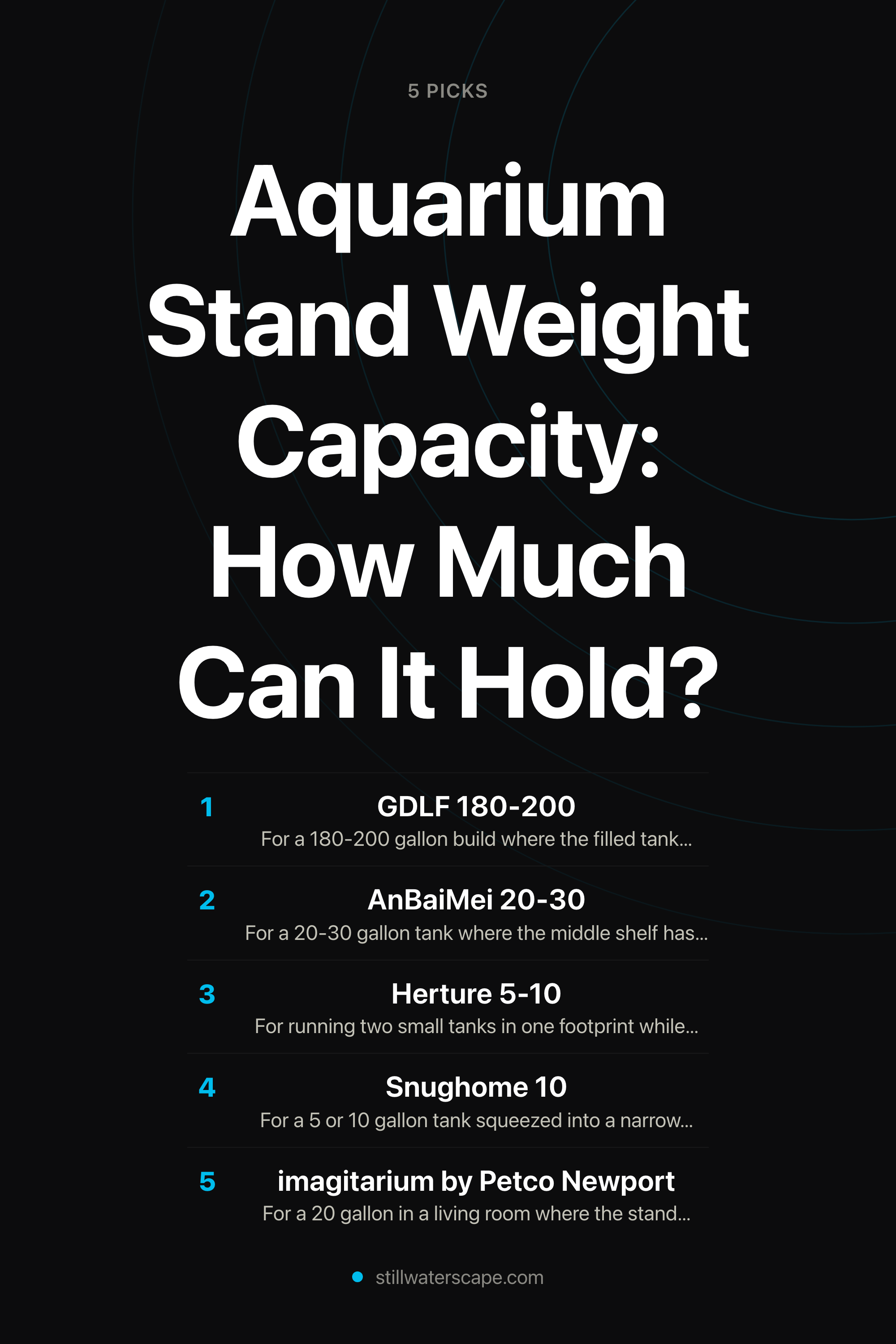
Aquarium Stand Weight Capacity: How Much Can It Hold?
Gallon-based weight tables disagree by 25 lbs on a 55-gallon tank because they use different water constants. Here's how to build a load figure for your specific setup — substrate, hardscape, sump, lid — and why contact, flatness and floor support matter more than clearing the rated number.
· 12 min read